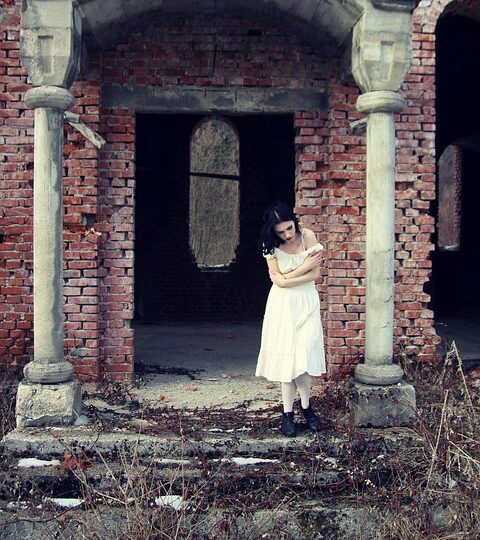

After a humble life as a shoemaker in Santorini, Greece, a man is said to have returned as Vrykolakas, a vampire from Greek folklore. But in the case of this Vrykolaki, it wasn't devouring human life that kept it alive.
Perhaps sunlit Santorini isn't a place people would think vampire-like creatures roamed, although history says otherwise.
From the text of a French priest we have some of the oldest documented written stories about the vampire Vrykolaki from Greek folklore. One of them is the story of Alexander of Pyrgos.
Shoemaker in Pyrgos Castle
His name was said to be Alexander and he was a shoemaker in the castle of Pyrgo. During his life he was known as a gentle and kind man.
It is not mentioned exactly what happened that turned Alexander into a vrykolak after his death. Most often, Greek vampire stories are about people living sinful lives who turned into vampires. However, in Alexander's case it seems that something else triggered the transformation. It is worth noting that Alexander is not the only shoemaker who turned into a vampire, although the connection with the profession is unknown.
A helpful vampire from Pyrgos
According to the story, Alexander returned from the grave, not to attack or eat the flesh of the living as in many stories, but appeared to his living wife as he had done in life. He returned to repair his children's shoes, carry water for his family, work around the house, and chop firewood.
Although there is no mention of the family's reaction to the situation, it seems that it has been going on for some time and the neighbors took matters into their own hands. Seeing him doing his chores, drawing water from the cistern and chopping wood in the valley, it was decided to exhume his body from the grave. According to tradition, all Vrykolacy returned to their graves on Saturdays, so this is most likely what happened. Here even the helpful dead had to go.
-
The shoe vampire Vrykolakas from Pyrgos Castle
After a humble life as a shoemaker in Santorini, Greece, a man is said to have returned as Vrykolakas, a vampire from Greek folklore. But in the case of this Vrykolaki, it wasn't devouring human life that kept it alive.
-
Sea Draug: A ghostly fisherman from the Norwegian coast
Believed to haunt the obscure seas of the north, the Sea Draug is the spirit of drowned fishermen and other unfortunate souls who perish in the waters.
-
Haunted Jane Street Hotel: Echoes of Lost Sailors
After the tragedy and sinking of the Titanic to the bottom of the Atlantic, the surviving crew members were sent to The Jane Street Hotel in New York. According to the stories, they still haunt rooms where the trauma related to their tragedy remains.
-
Soft music haunting Hald Pensionat
Who could be haunting the aged Hald guesthouse in Mandal? Soft piano music plays in the afterlife and rumors of traces of a Norwegian pirate seem to persist.
-
Mandurugo's vampire bride from Filipino folklore
Hidden among human society, the vampire creature Mandurugo slowly sucks the blood and life of her humble husbands to maintain her eternal youth and beauty.
-
The ghostly guard MS Nordstjernen
The MS Nordstjernen spent decades ferrying passengers north through the Arctic Sea, and although the waters can be brought this far north, it always seemed to reach port unscathed. Some believe it may be Ernst, the ship's ghosts.
-
A cabin in the woods where the forest looks back
There are many strange stories associated with the DNT Flisberget cabin, deep in the mysterious Finnskogen forest, on the border of Norway and Sweden. So much so that it was considered the scariest cabin in the country.
-
Devonshire Park Haunted Theater: The Ghostly Fiddler of Eastbourne
Do any of the Titanic musicians haunt the Devonshire Park Theater in Eastbourne, England? Who is the person behind the ghost who is said to still play the violin?
-
Mrs. Soria Moria Haunted Villa Fridheim
Soria Moria: Villa Fridheim is often called Soria Moria Castle, the name comes from Norwegian folk tales about a hidden castle where the hero will find a princess. Nowadays, it has also become an expression of expectations towards a wonderful place.
-
Dun Dreach-Fhoula – A blood-soaked, stinking castle
The ruins of Dun Dreach-Fhoula Castle are said to be located deep in the MacGillycuddy's Reeks mountain range in Kerry, Ireland, and are home to the bloodthirsty fairies of the Underworld. The question is whether this is an antique legend or a contemporary hoax.
-
A woman waiting and haunting the Struten Lighthouse
After being stranded on their miniature island in the Struten Lighthouse during stormy weather and crashing waves, the woman died of the disease and has haunted her ever since, still waiting for assist that never came.
-
The womanizer from room 315 haunted the Sauda Fjordhotel
The once stately Sauda Fjordhotel is said to be haunted by a repentant colonel who took his own life when his womanhood lost the love of his life.
Vampirologists. Franciszek Ryszard
By Light Unseen – Vampires in media and culture
Greek accounts of the Vrykolaki
Image Source: Pixabay.com