

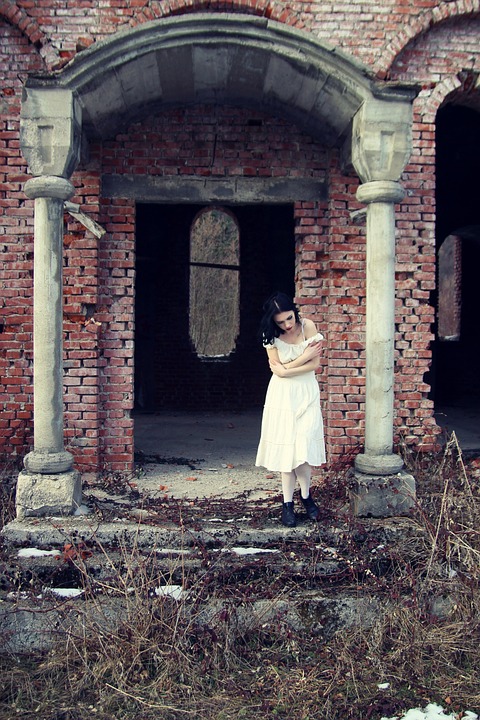
Not all vampires rise with the moon and inhabit murky castles. Some wait in the heat of the Australian wilderness. Like the Yara-ma-yha-who monster from Aboriginal folklore, found under Australian fig trees.
Lurking in the mythical landscapes of Australian Aborigines is a devouring creature from Dreamtime cosmology. Yara-ma-yha-that belongs to no crypt, no ruined castle, no midnight hunt. Instead, it lives on branches bulky with leaves.
According to recorded versions of the legend, especially those preserved by David Unaipon, the Yara-ma-yha-is a vampiric creature from southeastern Aboriginal traditions, distinguished not only by its grotesque appearance, but also by its bizarre, cyclical feeding horrors.
The thing in the tree
Yara-ma-yha-which is often described as a petite, red, frog-like humanoid creature with a huge head, a wide toothless mouth, and suction cup-like appendages on its hands and feet. Its shape is unnatural from the very beginning, evoking something that is both childish, absurd and deeply hazardous.
Its preferred habitat is the fig tree. A tired traveler, escaping the heat under the branches, unknowingly exposes himself to immediate danger. It sucks blood using suction cups on its fingers and toes, attaching itself to the body in a way that is more parasitic than predatory.
However, after partially draining the victim, Yara-ma-yha- does something even stranger. Instead of simply killing it, it swallows the person whole. It then drinks water, falls asleep, and later regurgitates the prey. The victim emerges alive but changed, described as shorter and redder than before. This process is repeated on subsequent encounters until the victim becomes smaller and smaller, eventually transforming into another Yara-ma-yha-who. Some say after the third time.
It is busy during the day, not at night. According to legend, one possible way to survive the encounter is to play dead until sunset, taking advantage of the creature's diurnal habits.
Children's warning and cultural feature
Like many folk creatures, the Yara-ma-yha-who probably served practical and spiritual purposes. Recorded traditions suggest that the story may have been used to warn children against wandering, behaving inappropriately, or resting alone in hazardous places.
Scholars and commentators have proposed various speculative inspirations for Yara-ma-yha-who. Could this have occurred with Malay settlers reporting on tarsier primates from Southeast Asia? Or maybe it's the story of Thylacoleo carnifex, a carnivorous marsupial that swooped down on its prey from the treetops.
And somewhere in the oldest corners of history, where sunlight burns and fig branches sway without wind, there is a possibility that not every red thing in the leaves is fruit.
-
Yara-ma-yha-who: Australian day vampire under the fig tree
Not all vampires rise with the moon and inhabit murky castles. Some wait in the heat of the Australian wilderness. Like the Yara-ma-yha-who monster from Aboriginal folklore, found under Australian fig trees.
-
La Patasola: The one-legged hunger of the Colombian wilderness
It is said that a vampiric creature lurks deep in the Colombian wilderness. The one-legged La Patasola is said to deter those who threaten to destroy its forests.
-
Kanjirottu Yakshi: The vampire spirit from the holy crypt B of the Sri Padmanabhaswamy temple
Sealed in Vault B of the Sri Padmanabhaswamy Temple in Kerala is an venerable and bloodthirsty deity who is said to pray for atonement for his sins. Known as the vampire Kanjirottu Yakshi, people are still afraid of her wrath and refuse to open her vault.
-
Krasue: the floating head of Southeast Asia's nightmares
Floating in the air throughout rural parts of Thailand and the rest of Southeast Asia, the disembodied Krasue spirit hunts for blood.
-
Vrykolakas Vampire in Sunny Mykonos
The vampiric Vrykolakas from Greek folklore is said to terrorize the inhabitants of the island of Mykonos. To put an end to the haunting, the body's remains were exhumed, burned and buried on an inhabited island. But did it work?
-
The night splitter of Filipino folklore
As part of the shapeshifting Aswang demons of the Philippines, Manananggal soared into the sky in her bat-like appearance, hunting for human blood.
-
The penitent vampire Vrykolakas in Santorini
After the man died before atoning for his crimes, he returned from the dead as the vampiric Vrykolakas when his wife did not fulfill his last wishes. The next month was full of terror and hauntings.
-
The vampire Vrykolakas in Patmos
After terrorizing his village, the vampire Vrykolakas from Patmos, Santorini, was taken to an inhabited island and set on fire. The question is, did it really work?
-
Churel: A vengeful vampire from South Asian folklore
Fueled by anger and revenge, the vampire Churel of South Asian folklore is said to haunt humans to drain their blood as a vengeful spirit raised from the dead.
-
The shoe vampire Vrykolakas from Pyrgos Castle
After a humble life as a shoemaker in Santorini, Greece, a man is said to have returned as Vrykolakas, a vampire from Greek folklore. But in the case of this Vrykolaki, it wasn't devouring human life that kept it alive.
-
Sea Draug: A ghostly fisherman from the Norwegian coast
Believed to haunt the murky seas of the north, the Sea Draug is the spirit of drowned fishermen and other unfortunate souls who perish in the waters.
-
Haunted Jane Street Hotel: Echoes of Lost Sailors
After the tragedy and sinking of the Titanic to the bottom of the Atlantic, the surviving crew members were sent to The Jane Street Hotel in New York. According to the stories, they still haunt rooms where the trauma related to their tragedy remains.
A child-eating bloodsucker from Australian Aborigines' nightmares
Dream time | Religion and philosophy | Research starters
David United – Wikipedia, the free encyclopedia
Image Source: Pixabay.com