

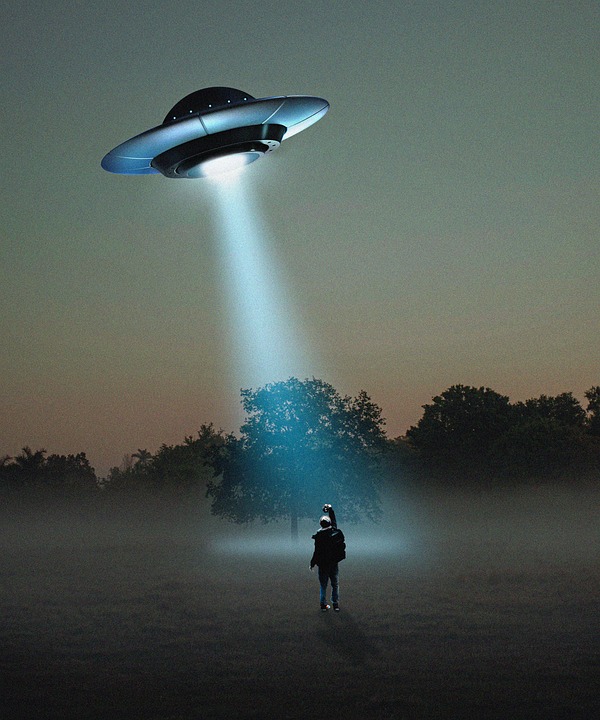
The authors of the scientific article believe that there are very few extraterrestrial civilizations in the Universe.
The greatest mystery of our time is the question of the existence of bright aliens, or advanced extraterrestrial civilizations. Some scientists still claim that they exist and that they just need to be found. Others believe that we are alone in the Universe.
The authors of a recent paper published in the International Journal of Astrobiology believe that the answer to the question of whether extraterrestrial bright life exists in space may be an “either-or” hypothesis, they write. Forbes.
Life must either appear or it must not.
In their paper, the scientists argue that on planets like ours, life should either form over a long period of time or not form at all. This means that space can be either empty or full, and values in between seem unlikely.
Scientists say that in ecological systems, whether it is a planet or a galaxy, populations develop from a certain initial value to a stable equilibrium state in which the average number of births and deaths per unit of time is the same.
The equilibrium point is a function of birth and death rates and the basis for the existence of an ecological system.
The authors claim to have applied a classical statistical result to the question of life in the universe.
If you run a series of experiments for which the answer is binary (yes/no) and you have no information about those experiments, you can expect that almost all of the experiments will give a positive result or almost all of them will give a negative result.
They say that it is unlikely to obtain intermediate, mixed results. This idea was first proposed by Edwin Jaynes, the founder of probability theory, which was based on the work of biochemist John Haldane.

The chance of finding aliens is zero
Still, many seekers of extraterrestrial intelligence insist that life is common in space. But Haldane believed that identical results should be expected under identical conditions, the authors say.
This means that if life probably exists, it will be everywhere, and if it is very infrequent, it will be nowhere.
According to scientists, it would be strange if half of all planetary systems had technologically advanced civilizations. This would mean that tiny changes in the properties of these planetary systems would significantly change the prospects for the emergence of technological civilizations.
Scientists have concluded that if there is only one extraterrestrial bright civilization, the chances of detecting it are zero.
If advanced extraterrestrial civilizations were to arise, they would likely be evident in the infrared spectrum of delicate, thanks to structures like Dyson spheres. But nothing like that has been found, scientists say.
The aliens are very far away
Even if we assume that the presence of extraterrestrial intelligence is extremely infrequent, there are still about a trillion galaxies in the entire Universe, making finding extraterrestrials virtually impossible.
The authors of the article believe that advanced extraterrestrial civilizations, if they exist at all, are most likely very, very few in number and very far from each other.
Scientists therefore allow for the possibility that aliens may live in another galaxy, but they simply do not exist in our galaxy. This means that Earth may be the only inhabited world in the Milky Way.
Image Source: Pixabay.com