
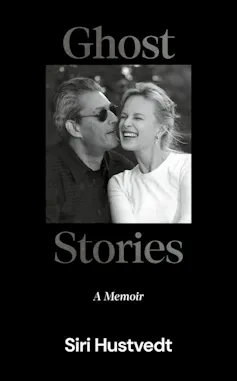
“What exactly is a self without others?” This question comes halfway through Siri Hustvedt's extraordinary up-to-date memoir on grief. Ghost stories. In my opinion, this drives the entire book.
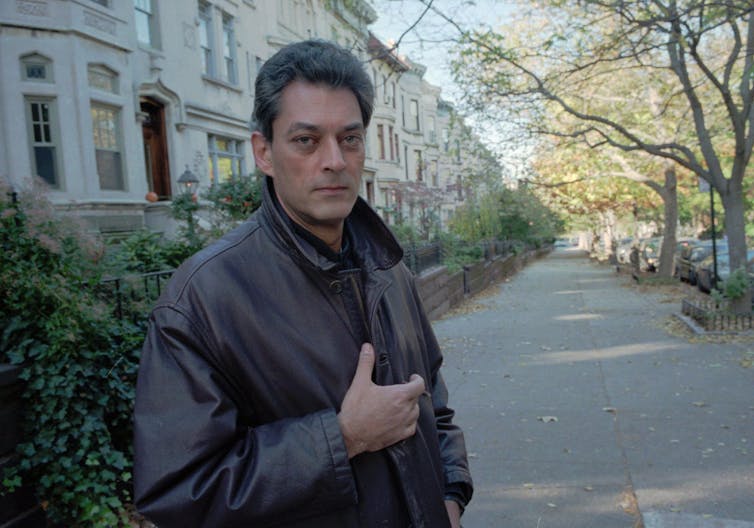
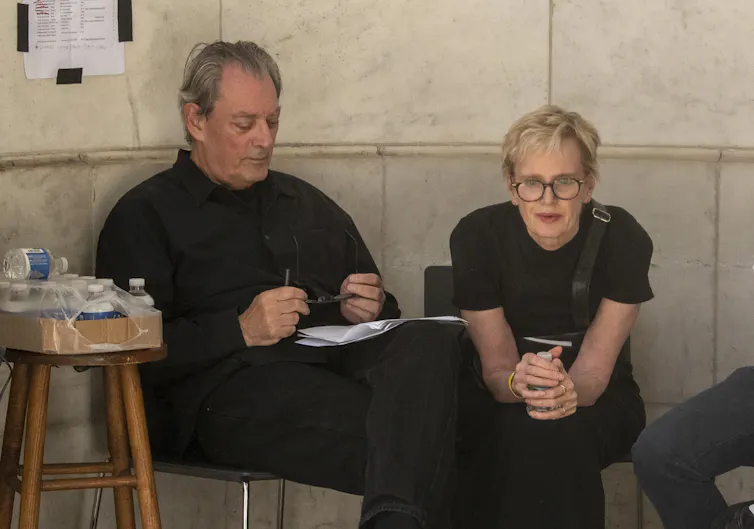
Ghost Stories reflects on Hustvedt's life with her husband Paul Auster, her partner of 43 years, following his death in April 2024 at the age of 77. Auster, an internationally renowned writer and filmmaker, whose notable works include: The New York Trilogy (1987), Smoke (1995) and a novel nominated for the Booker Prize, 4 3 2 1 (2017).
Review: Ghost Stories: A Notebook – Siri Hustvedt (Scepter)
Ghost Stories tells the story of the last years, months and weeks of their life together, as well as the period immediately after Auster's death. The central setting of the memories is the four-year period 2021–2025. It begins as Covid-19 remains a sedate threat and Trump's first term is coming to an end. In the case of Hustvedt's Brooklyn home, those years included two untimely deaths.
Auster's first biological grandchild, Ruby, died at the age of ten months under the care of her father, Paul's son, Daniel, in November 2021. The medical examiner listed her cause of death as “heroin and fentanyl,” Hustvedt writes. Daniel died of an overdose five months later, in April 2022, at the age of 44, after being arrested and charged with manslaughter, criminally negligent homicide and endangering the welfare of a child.
Hustvedt and Auster, along with their adult daughter Sophie, mourn the two and the terrible circumstances that led to their deaths. Paul called these events “terrible things”; Hustvedt finds putting them into words “almost unspeakable.” Feeling the acute effects of this elaborate grief and stress, as well as the unfavorable gaze of the media, Auster fell ill in September 2022.
AAP
Reflecting on the timing, Hustvedt notes that while research linking cancer to emotions and loss is “mixed,” the consensus in the medical literature is that stressors impact the immune system.
Auster suffered from fever, fatigue and shortness of breath every day. Initial diagnoses included long Covid-19 and pneumonia, but early the following year he was diagnosed with non-small cell lung cancer. Then there were numerous hospital visits and various treatment methods – biopsies, tomography, chemotherapy, immunotherapy. Nothing worked.
Paul Auster died just 12 months after diagnosis. Ghost Stories ends as Hustvedt and her family prepare for the first annual memorial service in April 2025.
Incredible intellect – and feelings
“What exactly is a self without others?” This should not be confused with a purely intellectual question. It's not, and it's certainly not in Hustvedt's hands – though she brings her fierce intellect to it.
Hustvedt has written 17 books to date, spanning fiction, nonfiction and poetry. These include, among others, the best-selling novel entitled What I loved (2016), perfectly researched memoirs, The trembling woman, or the story of my nerves (2010) and five collections of essays.
He has a doctorate in English literature, three honorary doctorates and other distinctions. A true erudite, her interests include neuropsychoanalysis, biology and philosophy. However, her thinking is – always – embedded in the experience of ordinary, everyday life. For Hustvedt, being yourself means coexisting. In other words, he understands that we are feeling, sensing beings who are always entangled with other sentient, sensing beings.
Ghost Stories begins with Hustvedt's daily events in the period immediately after Auster's death. She drifts into his “beyond” and feels “mad beyond recognition.” The first two sentences provide a plain confirmation: “I am alive. My husband, Paul Auster, is dead.”
Hustvedt's initial experience of grief is acute: She has difficulty breathing, eating, sleeping, and even navigating to local stores and back down the street in Park Slope, Brooklyn, where she has lived for so many decades. Her memory is faulty; time itself seems strange. Here is an author without continuity.
A touching love story
Do I need to warn you? This book will make you cry. I started crying after about 20 pages and continued at regular intervals.
Hustvedt's experiences are similar to my own life: raising children in a blended family, dealing with addiction at close quarters, and having a family member diagnosed with terminal cancer. So reading Ghost Stories brought back crucial personal memories.
But this book is also a moving love story, inevitably intertwined with the cycles of birth and death. Certainly no reader is far from these things.
“I'm very interested […] the rhythmic reality of human existence,” Hustvedt told me in an interview for The Conversation in 2022. “For women, fertility is linked to the menstrual cycle. There is breathing, but there is also the rhythm of night and day and the pull of the tides. All of this must be considered part of the processes of our mortal existence.”
I appreciate how Hustvedt highlighted Auster's departure in Ghost Stories as an aspect of this beat.
In Ghost Stories, cyclical time is remembered with hope, for when Auster died, the adult daughter she shares with Hustvedt was expecting her first child. The birth of baby boy Miles to Sophie Auster and her husband Spencer Ostrander took place in behind schedule 2022, marking another key milestone in the eventful four-year period that is the focus of the memoir.
By this time, Auster, adjusting to the realities of a life that would soon be cut miniature by cancer, began writing to the boy. His letters to Miles – there are six of them – form part of Hustvedt's text. These unfinished letters are probably Auster's last texts.
“It turns out I have less time than I thought,” he confided to Miles in his last and shortest letter, written in April 2024. At that time, little Miles was just beginning to connect sight and sound in the world around him.
Sarah Yenesel/AAP
Tapestry with “found manuscripts”
Auster's letters are part of a tapestry of memories. Indeed, the book is interspersed with “discovered manuscripts.”
Hustvedt wrote 12 emails to a diminutive group of friends and family during Auster's treatment, updating them on the patient's progress, the cancer and related medical plans and treatments. There are lyrics from a song dedicated to Auster by his daughter Sophie and several messages and notes sent between family members, including Hustvedt and her stepson Daniel.
Hustvedt also included two deeply moving love letters she wrote to Auster very early in their relationship, when he left her for a miniature time to return to his failing marriage with acclaimed miniature story writer Lydia Davis, Daniel's mother.
These “found manuscripts” are scattered throughout the site, adding to fragmentary diary notes abandoned in the middle of events, as Hustvedt endures the daily, demanding physical, administrative, and emotional labor of caring for Auster during his illness. He reads all the studies about their specifics and makes calculations about survival rates – but decides not to share his results with the patient.
We then have a moving narrative of her mourning in the immediate aftermath of Auster's death, based on her readings in grief studies. This combination of “found manuscripts” and the forward-moving narrative brings a slightly polyphonic and archival element to the story.
In this way, the book resembles Hustvedt's novel entitled Burning world (2014), nominated for the Booker Prize, a narrative composed of fictitious “found manuscripts” composed by the researcher many years after the death of the main character. In Ghost Stories, the result of this combination is a story that feels original, direct and real.
“What exactly is a self without others?” Of course, the self can never be deprived of others, nor should we desire it. Hustvedt knows this very well. Depriving yourself of others is a perilous, patriarchal fantasy. Even fascist.
“I was your you. This walking back and forth, a wavering confession, an argument, a desire,” Hustvedt writes in one of her diary entries, addressing Auster, who was already dead by then. “Me and you. You and me. And now silence. I'm working hard to admit it. Being without you.”
Elsewhere he writes:
Let me put it more clearly: yes, I mourn Paul, but most of the time I mourn Siri and Paul. I am grieving AND. I mourn how AND made me feel in the world. That AND where he and I overlapped.
Auster reportedly told Hustvedt that one difference between them was that she tended to be more persuasive when incensed, while he felt like he became less so. I found this anecdote intriguing because I think that as a writer, Hustvedt is incredibly persuasive in this book, and yet she is under enormous pressure.
In this way, Ghost Stories has something in common with Hustvedt's earlier memoirs about the mysterious neurological disease she suffers from after her father's death. Both were written during a period of acute difficulty: both are extraordinary books.
“Health is not an escape into reason” – Hustvedt he once told mequoting the favorite phrase of the English psychoanalyst and pediatrician Donald Winnicott. “Health tolerates decay.”
Ghost Stories is part of a subset of memoirs written by leading female writers mourning the loss of a longtime partner, such as Joan Didion The Year of Magical Thinking and Pulitzer Prize-winning novelist and journalist Geraldine Brooks Memorial Days, recently nominated for a Stella Award.
The market for this subset of memories is significant: we know, for example, that it is women rather widowed than men, and older women are among the most avid readers. And the latest research by Australia Reads shows that the lifewriting genre is more popular with readers than any other nonfiction category.
I am not trying to suggest that Hustvedt was consciously thinking about a market for this memoir. On the contrary, he writes for his own survival. In this way, he holds readers close and delivers a powerful narrative as a witness to death and dying in a book observed with insight and discernment.
Ghost stories can and should change the way you think about life with and alongside your significant others. It deserves many readers.
Image Source: Pixabay.com